Friday, February 27, 2015

Flash Fiction Challenge #3

Here we go, people! It’s time for another circular flash fiction challenge! I hosted the last one in September 2014, and it created some awesome stories. You can check them out here.

For those of you who haven’t heard about my flash fiction challenges, every so often, I host a challenge that includes three elements:

  • A writing prompt someone gives to you
  • A writing prompt you give to someone else
  • Feedback for each of the participants by the various participants

“Flash fiction” is a genre of short fiction, generally around 500 words, but examples can be up to 1000 words. In our challenge, the maximum length will be 1000 words, but each person may assign a shorter length with their prompt. Prompts can be anything from a concept to a sentence starter to a picture, etc. If it can prompt a story, you can use it.

Tell me a story in under 1000 words

Feel free to use this image to promote the challenge. Just don’t change it in any way, please.

If you’d like to participate, comment on this post with the name of the blog you would be posting your story on. If you don’t have a blog, you can still take part! Email me at rachelleoneilwriter [at] gmail [dot] com, and I’ll put you on the list. On Friday, March 13th, two weeks from today, I will pair you each with your partners and give the official rule list. You may sign up anytime between now and then. For now, remember the following:

  1. Your prompt is dependent on someone I assign to you.
  2. No profanity, sexual scenes, or excessive violence.
  3. If you do sign up, do me a favor and spread the word about the challenge via Twitter, Pinterest, or some other method. You may use the above image to do so.

If you have any questions at all, please comment or email me. I’d love to have you take part!

Friday, February 20, 2015

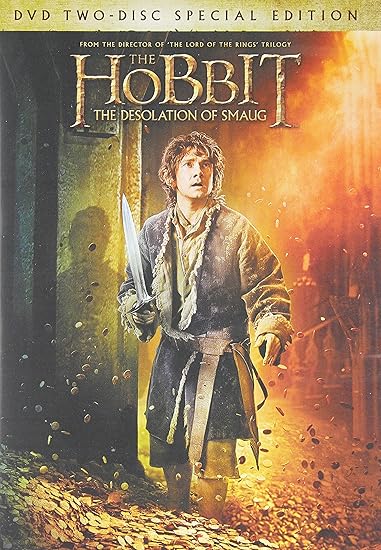
Wrapping Up The Hobbit, Part 3

Today, I present my final post in my Wrapping Up The Hobbit series. You can find Part I here and Part II here.

Wrapping Up The Hobbit Part 3

When the trilogy was first announced as a trilogy, a lot of people were upset. The accusations flew. How could Peter Jackson turn a short adventure story into a trilogy of films? Was he trying to match LotR? He’ll probably just ruin the story. He’s just after money. And on and on it went… I, personally, was quite excited at the prospect of three films. A bit, apprehensive, yes. Three movies did seem like a little more than the story could sustain, even with storyline material from the LotR appendices. Overall, though, I thought it would be neat to see The Hobbit placed in its broader context.

See, when J.R.R. Tolkien wrote The Hobbit, he was creating a children’s story. It’s a simple story written with little concept of the world it was set in. Sure, Tolkien had messed around with his elvish languages a bit, and he had written random stories that would later be incorporated into Middle-Earth history, but he didn’t know his world like he would later. The Hobbit was just a story. After it was published, though, Tolkien began delving deeper into this world he had created. By the time Lord of the Rings was published, the world of Middle-Earth was much broader and better understood. Tolkien only had a vague conception of what Gandalf was doing when he went off by himself in The Hobbit. Later, he created the White Council and the broader implications of the dwarves’ journey. Without their retaking of Erebor, LotR may have turned out very differently. But Tolkien didn’t know any of this when he wrote The Hobbit.

As Peter Jackson approached the story, however, he did know this broader context. Unlike Tolkien at the time of its writing, Jackson knew how the events of The Hobbit would play out in later history. And he thus chose to broaden the story. The last comment here words this very well, touching on the importance of Gandalf’s actions, and I encourage you to read it.

So, the trilogy sets the dwarves’ journey in its proper context, in my personal opinion, which better sets up LotR. I’d like to touch on Azog briefly, and then I’ll move on. It is true that, the way Tolkien wrote it, Azog, the Pale Orc, died long before the events of The Hobbit. However, his inclusion helped  the Battle of the Five Armies make more sense to me. In the book, everything climaxes in the Battle of the Five Armies before the doors of Erebor. And, though the book does mention the orcs following the dwarves from Moria, I never really understood why they were at the battle. With the added storyline of Azog and his personal grudge toward Thorin, the story gained tension, and the orcs’ presence at the battle made more sense. To me, anyway. The tension did get a little too ramped up at times, but, overall, it gave urgency to a journey, which can become boring without conflict of some kind.

Now, on to Fili. As I mentioned in my first post, I feel like Fili got passed over in favor of Kili. Though I liked both of them, Fili was definitely my favorite. He had such a kind heart and protective nature. His most highlighted moment in the movies is probably the dock scene, where he says, “No, I belong with my brother.” He has other gems, though. While Thorin is being all broody and unaccepting of Bilbo, Fili and Kili both take to the hobbit right away. They may tease him (and occasionally send him into the midst of trolls), but they’ll be there to protect him, too. Of course, Fili is fiercely protective of his brother, to the point that he stands up the uncle he’s probably idolized all his life. And during the attack on Bard’s house by orcs? He jumps in, without weapons, to defend Bard’s children. He tells Bard to flee with his children, even though that makes the dwarves more vulnerable. While Kili gets the spotlight in the films, Fili is the one who truly deserved it, in my mind.

Fili and Kili’s deaths have always confused me a bit. While Thorin’s death is thematic - his greed brought him to his downfall - his nephews’ deaths just seem pointless. If Tolkien wrote that just so Dain could take the throne of Erebor… What was wrong with Fili ruling? In the end, maybe its just a nod to the senselessness of war. People die who don’t deserve to. Dwarves die defending their uncle. And it’s sad. While the book’s climax made me sad, though, the movie’s climax broke me apart. You may think I’m exaggerating, but I’m not. I knew it would hurt; I was tense from the very beginning of Battle of the Five Armies. The way Fili, Kili, and Thorin’s deaths were done, though… First of all, the writers completely departed from the book on this scene. Fili and Kili don’t even die together! Fili gets stabbed in the back like a sacrificial lamb, Kili dies defending Tauriel, and Thorin dies because of sheer stupidity. And it all runs together in an emotional wreck without closure. Fili’s death honestly just felt like a way to get him out of the way. I don’t know if it was intended that way, but he literally gets stabbed in the back by Azog, dropped over a cliff, and then ignored. Then the writers are free to focus on Kili and Thorin.

Kili’s death is pretty emotional, due in part to Tauriel’s reaction, but I’m still rather annoyed that he and Fili didn’t die together. And that scene kind of cheapened Tauriel’s character, in my opinion. It made her seem weak and ineffective, unlike the warrior she’s presented as. Though I believe female characters should both rescue and be rescued, as should male characters, this scene didn’t honor Tauriel’s character. It made her seem, as I said, weak, and that was unfair, in my mind. Kili ended up with the glory, though he died gaining it.

As for Thorin, oh boy. After finally snapping out of his selfish, gold-lusting state, Thorin joins the battle to save his kinsmen. It’s quite a heroic scene. Once Fili and Kili have been killed, though, all the focus shifts to Thorin’s fight with Azog. They fight to the death on a frozen lake, and, though Thorin defeats Azog, he stupidly follows after the “corpse.” And dies because of it. I mean, as I said, Thorin’s death is thematic. He should die. Having it come at the hands of his own stupidity, though, really annoys me. Thorin’s a better warrior than that.

The worst part of it all is the lack of closure. Though Kili is mourned by Tauriel, and Thorin gets time with Bilbo, no one mourns over Fili. It truly is like he just got ignored. Now, I believe there is a funeral scene in the extended edition, but, honestly, there should be closure of some kind in the theatrical version. Stories should feel realistic, but they’re also a means of escape for us. Each of these deaths was emotionally devastating for me, but there was no closure for Fili, in particular, and that feels entirely too much like reality.

Despite my problems with the climax, the very end of the movie brought everything back to the beginning, which made me happy. I liked the end. I’m just not keen on the rest of the movie. Overall, I’m not sure I’ll watch The Hobbit trilogy again. Maybe sometime in the future, but, for now, it honestly hurts too much.

For those of you who’ve seen Five Armies, what did you think of the climax? Let me know in the comments!

Friday, February 13, 2015

Do You “Ship” Your Characters?

I recently read a blog post entitled Ship it like FedEx: What Writers Can Learn from the Fandoms. The premise got my brain turning, but the article didn’t come at it from the exact angle I was expecting. It wasn’t a bad article; it had some good points. Feel free to check it out. Anyway, as I said, the article got my mind going, so I thought I’d develop some of my thoughts for you.

“Ship” is a shortened, verb form of the word “relationship.” (And, supposedly, it’s now in the Oxford English Dictionary) If you’re part of any fandoms (or even if you occasionally check out the Geek sections of Pinterest or Tumblr), you’ve probably heard of shipping, which is basically matchmaking tendencies on steroids. Fandoms tend to go a little ship-crazy. They ship adorable things; they ship some super strange things. They ship it whether its actually canon or not. And the emotional investment involved in these ships? It can be intense.

Now, I’m not informing you about the craziness of fandoms so that you can wonder what the world is coming to (believe me, I wonder that myself some days). Instead, I mention “shipping” to point out something about our stories: Do your characters’ relationships excite you? Essentially, do you ship your characters? And do you set things up so your readers can as well?

Shipping Characters

There are a few elements to setting up a ship-worthy romance:

  • The Meet Cute – I first heard this term on The Writer’s Alley, courtesy of Pepper Basham, and, apparently, it’s a huge element of the romance novel. I realize many of my readers don’t write purely romance, but I’ll bet many of you do have romantic threads in your stories. How does your couple meet? Are there sparks? Do they instantly get the wrong impression about each other (Pride and Prejudice)? Where do they meet? Is it relevant to the story? If they’ve known each other a long time before sparks ever occur, what is that one scene where they become aware of each other? As a writer, you love these characters and should delight in showing their attraction to and love for each other. Think of Faramir and Eowyn in Lord of the Rings. I can’t remember their exact meeting in the book, but in the extended version of the films, it sets the mood immediately. Create a smile/squeal – worthy scene for your readers. They’ll appreciate it, I promise.
  • Interaction – Real relationships require interaction. Attraction is all well and good, but no relationship can stand only on the fluff of attraction. Make your characters talk to each other. This doesn’t always have to be serious. Banter is an awesome way to make a relationship fun. I love reading good banter between characters. Joking and lighthearted interaction adds a dimension that shouldn’t be ignored. There should also be some substance in that interaction, though. Do your characters know what each other’s values? What are their greatest dreams? Do they share them with one another? I love romance, but I would much prefer to ship a couple who learns to love each other through honest interaction than one who’s all fluff.
  • Tension – There are two sides to romantic tension, in my mind. There’s the good kind that can create excitement, and there’s the bad kind that just creates angst. In my personal opinion, angsty romances aren’t healthy, so I’d rather not create them in my stories. However, stories are driven by conflict, and that conflict can come in the form of subtle tension as easily as overt danger. Perhaps your characters aren’t sharing a part of themselves with each other. This drives a wedge that must be overcome. Instant conflict. And most relationships do go through a stage or two of uncertainty. Whether that’s because feelings haven’t been admitted or because change is occurring, uncertainty creates a great deal of tension in a relationship. We should be careful with this, though. Being true to reality is a good thing, and some tension will keep readers eager to find out what happens next. Making the relationship nothing but angst and drama, though, is neither pleasant to read nor healthy to experience.

I think what it all comes down to is being thoughtful about your characters’ relationships. Have you ever thought about shipping your characters? What makes you excited about a couple when you read/see them? Let me know in the comments!

Next time: Wrapping Up The Hobbit, Part 3

Friday, January 30, 2015

Wrapping Up The Hobbit, Part 2

So, continuing from my post a couple of weeks ago, today I have more thoughts to share with you about The Hobbit trilogy of movies.

First of all, I have to add to my last post, under Things I Loved. Somehow, I completely forgot Bard, one of the my favorite characters in the entire story! Cue my gasp of horror. I’m so glad one of my readers reminded me. So, when I read the book, Bard the Bowman was possibly my favorite single character. I loved Bilbo, of course, but somehow Bard stood out to me. Seeing him brought to life on screen was one of the greatest delights of the films for me. Side note: Am I the only one who thought he was played by Orlando Bloom at first?

He wasn’t, of course. It was Luke Evans who brought the character of Bard to life for us. He was so perfect! Now, I do believe he was darkened a bit from the book. However, I don’t think it was a bad change. And it was certainly balanced out by his interaction with his family. I loved the development the writers gave to Bard and his children. It added a very Tolkien element to the story, in my opinion: something worth fighting for.

I wasn’t entirely happy with Bard at Erebor, though. His motivation for demanding a share of the treasure was to protect his people. In that, I believe he was completely justified. His attitude just seemed unexpectedly harsh. Still, what would you do if faced with a stubborn, greedy dwarf-king? And, ultimately, Bard didn’t want the treasure for the sake of treasure. I think that was made clear. He and his people were promised a share of the treasure in return for helping the dwarves, and, with Laketown destroyed, they desperately needed that share in order to rebuild. Bard is a character who cares deeply about his family and his people, who can’t stand for injustice, and who deals fairly with others. He leads the people of Laketown when their world is destroyed, and, even in battle, his focus is on keeping those he loves safe, not bringing glory to himself. Bard the Bowman was fantastic, and I’m so glad I got the chance to see him on screen.

Since I’ve mentioned Laketown, I’m going to talk about Alfred for just a moment. *shudders* I highly dislike slimy sidekicks with no morals, which is exactly the description of Alfred, assistant to the Master of Laketown. He’s conniving, rude, cowardly, greedy, and malicious. I don’t exactly know why Bard seemed to take him at face value during Battle of Five Armies; he didn’t exactly trust Alfred, but neither did he seem to realize what a danger the man presented. Maybe I read that all wrong, but, watching the movie, I kept wondering what Bard was doing. Perhaps he was giving Alfred a chance for redemption? That could fit with his desire to unify his people. Anyway, Alfred reminded me too much of Wormtongue, and my opinion on his inclusion thus flip-flopped. Sometimes I was annoyed that the writers created another Wormtongue-like character for these movies. Then I would think: it just proves people like that exist everywhere, which is true. Ultimately, I can’t decide what I thought of his role in Battle. I dislike the character, of course, but whether he should have been included or not… I don’t know. Your thoughts?

Now I shall move on from the humans to possibly the single-most controversial aspect of the entire trilogy: Kili and Tauriel’s romance. I know that a lot of people didn’t like it. I don’t fall under that category, exactly, though I don’t think it was perfect. Overall, I liked them together. I loved the idea of a dwarf and an elf finding a way past their racial prejudices. And, yes, I’m a pretty big romantic, so it was hard not to like it. Still, their relationship didn’t feel entirely realistic to me. First of all, they barely interacted. And, of course, attraction doesn’t take long to develop, but the feelings they seemed to have for each other appeared in a rather short amount of time and with relatively little basis. Second of all, it was just a bit cheesy at times. Overall, I liked it. I just wish it had felt more real. I have no problem with an elf-dwarf romance. Had it been better developed, though, I would have truly loved it. Tauriel was pretty heartbreaking there at the end, though, in my opinion.

As for Tauriel as a character, I liked her.  The picture we saw of the Woodland Elves was somewhat hard and closed-off, but Tauriel gave a contrasting picture. She’s curious and kind toward outsiders. She has a different perspective than that of both Legolas and Thranduil. And I appreciated that contrast. I’m afraid her character was somewhat lessened by the love triangle, but it was a strong character who had a lot of potential. Partially unrealized potential, I think, but still real. And my personal headcanon is that Tauriel greatly influenced Legolas’ perspective in LotR. Just because Tauriel wasn’t in the books doesn’t mean she couldn’t have been a real part of the Woodland Realm. I personally feel that she was a very Tolkien-esque character.

That’s where I’ll end today. I still have to tackle the expanded story, Fili, and the climax of Battle, so I definitely have at least one more post to write on this topic. For now, what are your thoughts on Tauriel? I promise to be nice, even if we disagree, but I am curious about why you like or dislike her.

Next week: “Do You ‘Ship’ Your Characters?”

Tuesday, January 27, 2015

I’d Like Your Help to Better This Blog

light-bulb-376926_1280

Courtesy of Pixabay

 Hello, everyone! I hope your week is going wonderfully! I just want to let you know that I’m going to implement various changes in formatting and such with this blog over the next few weeks. And I’d greatly appreciate your help in evaluating those changes. I probably won’t tell you specifically what I’ve changed, but if you notice anything at all, would you comment and let me know what you think of it? You can also email me at rachelleoneilwriter [at] gmail [dot] com; I love to hear from my readers!

In addition, I’d like to know what you enjoy about my blog. Why do you follow? What kind of posts do you like to comment on? What would you like to see more of? So, if you could fill out the poll on the sidebar to the right really quickly, that would be awesome. If you’d like to be more specific or if you enjoy something I haven’t mentioned, let me know in the comments. I look forward to hearing your feedback!

Friday, January 23, 2015

Writing Links to Assist You on Your Journey

I love discovering new blogs and finding interesting articles through Pinterest, Twitter, and blogs. So, today, I’ve decided to share with all of you some of the most helpful writing links I’ve encountered recently. Enjoy!

5 Tips for Writing Funny Characters | The Storymonger

Character Growth Words | Go Teen Writers

Villainy 101: Master-minding Murder and Mayhem - A Villain's Arsenal | Gillian Bronte Adams

Crafting the Perfect First Line | The Write Conversation

Tracking Your Character' Emotional Arc in a Scene | Helping Writers Become Authors

The Treatment of Henchman | Crafting Stories in Red

When it's Okay for Characters to Cry | The Storymonger

How to Build a World and How to Destroy It | J.B. Simmons

Writing Transitions | Liam Wood

And, finally, a book giveaway that I’m sure you all would enjoy:

Giveaway of One Book from The Safe Lands Trilogy by Jill Williamson | Part of Dystopian January with Gillian Bronte Adams

Great Effort in Writing

Next week: Part 2 of Wrapping Up The Hobbit. You can find Part 1 here.

Friday, January 16, 2015

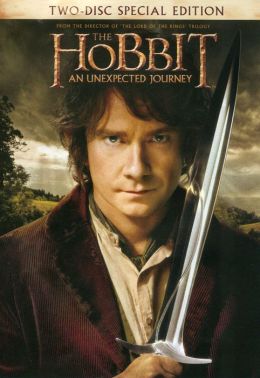
Wrapping Up The Hobbit, Part I

I love The Lord of the Rings. Though I didn’t watch the movies or read the books until I was in my mid-teens, I don’t consider that a bad thing. On the contrary, I believe that experiencing it first when I was older contributed to my deep love of the story.

Anyway, when a movie adaption of The Hobbit was announced, I was thrilled. Not only would there be more Middle-Earth, but I would get to see it on the big screen! I was ecstatic! With The Battle of the Five Armies, out in December, Peter Jackson has concluded his cinematic adaption of Tolkien’s adventure story. I’ve seen all three movies, I own the first two and their soundtracks, but my feelings about the trilogy are mixed.

This isn’t a review; let me make that completely clear. My intention is not to give information of the movies. I simply want to organize and share my many thoughts and emotions about the trilogy. Thus, there will be plenty of spoilers. If you want to jump in with your own thoughts, please do. I’d love to discuss this topic with you.

First of all, I neither love nor hate An Unexpected Journey, Desolation of Smaug, and The Battle of the Five Armies. Honestly, there are few, if any, things in any of them that I truly hate. Ultimately, I’ve come to think of the trilogy like that one song that you sing a little too long, a little too loud, and, occasionally, a little off key, because you love it so much. As I said, I was ecstatic about The Hobbit. I wanted to love it. I love Middle-Earth; I love Tolkien’s elements – his characters, his themes, etc. And so, in tThe Hobbit Trilogyhat way, I do love the movies for giving me more of that. There are, however, a lot of those too long, too loud, and off key moments.

Things I Loved

  • Bilbo – What a brilliant casting choice for Martin Freeman to play Bilbo Baggins. His facial expressions, his wordings… Everything about his performance as Bilbo felt true to Tolkien.
  • Fili and Kili – Whether you agree with me or not, I truly loved most of what was done with the characters of Fili and Kili, nephews of Thorin Oakenshield. I don’t think Fili got enough focus, though. Sure, Kili’s adorable, but Fili was my favorite, and I wanted more of the dependable, kindhearted older brother. In the book, they were always mentioned together. I feel rather slighted that Fili got essentially overlooked in favor of his younger brother.
  • Balin – Every story needs a mentor, and Peter Jackson found his in Balin, warrior of Erebor and oldest member of the Company. Now, it is true that, in the book, Thorin is older than Balin. The movies’ writers chose to change that, and, honestly, I’m not particularly bothered by the choice. I love the character of Balin. He sees the good and the bad in Thorin; he senses the potential in Bilbo; he truly cares for each member of the Company. He adds a necessary element of heart to a story dominated by action.

What I Didn’t Love

  • The CGI – I was probably more disappointed by the obvious use of CGI in these movies than by anything else. During An Unexpected Journey, I thought the visual “quirks” I was noticing must be caused by the new style of filming (48 frames/sec.). Lord of the Rings had such fabulous, innovative uses of effects, from its “bigatures” to its costuming to its sets, that I assumed The Hobbit couldn’t be as CGI-heavy as it seemed. Desolation of Smaug (and the profusion of Internet complaints) convinced me otherwise. I feel like not as much focus was given to making these films as natural-feeling as possible. It seems like they defaulted to computer graphics more often than they strictly had to, and it pulls me out of the story.
  • The Length – Strictly speaking, it’s not the actual running time that bothers me. Obviously, LotR is longer than average, and that’s not an issue for me. I like long movies. In this case, though, the movies feel too stretched out. I don’t really have a problem with the story being broadened (more on that in a later post). I just think it was extended too much. I’m curious about what wasn’t included, though, since apparently there’s a lot of filmed footage not in the movies. Three films was all right; I just wish they had been tighter, especially the first two. The stretched pace of Journey and Desolation set me up poorly for The Battle of the Five Armies, which, despite its length, felt like it rushed along without breathing room. Was I the only one who felt that way? I think the makers didn’t want their time in Middle-Earth to end, which I fully understand. I can forgive a lot of the slightly bloated scenes because I, too, want to revel in Tolkien’s world. Unfortunately, on the whole this indulgence came at the sacrifice of the story.

My Favorite Scene

There are plenty of little scenes I love, but I think my favorite may be the Riddles in the Dark scene in Journey. Andy Serkis’ performance as Gollum was brilliant in LotR, and I feel that it only got better here. More of Smeagol’s personality comes through in his interaction with Bilbo, whose reactions were priceless. This scene contains exceptional acting from both participants, it includes definite chunks of Tolkien’s words, and it sets up the events of LotR. I always love watching it. A close second is Fili’s protectiveness when the orcs attack Bard’s house in Desolation.

My Least Favorite Scene

The climax of Battle of Five Armies. No contest there. Fili, Kili, and Thorin’s deaths tore me apart, especially Fili’s. I’ll go more into detail about this in a later post, but that scene is definitely my least favorite in the entire trilogy. I didn’t appreciate how it was done, for the most part, and the gut-wrenching lack of closure did me an incredible amount of emotional harm.

This is far from a complete hashing out of my thoughts, but I’ll finish here for today. I’ll do one or two more posts on this topic, in which I’ll deal more specifically with other aspects of the movies. Now I’d like to hear your thoughts: What are your favorite and least favorite aspects/scenes of the trilogy? Let me know in the comments!